Wednesday, July 28, 2010

Armorcoat Window Film


Armorcoat Safety Window Film Reinforces Glass Reducing Chances of Injury and Property Damage

No matter what type of building you’re in – a home or office, corner store or corporate skyscraper – your glass and windows pose the biggest threat to your safety. Anything from a stray tree branch to a violent storm can send dangerous shards of glass flying, subjecting people and property to serious damage, injury or worse. That’s why so many home and business owners rely on the protection provided by durable Armorcoat safety window films.Armorcoat safety film is made from only the highest quality materials, such as tough, high tensile polyester and ultra-strong mounting adhesives – available in thickness ranging from 4 to 14 Mil (.004” to .014” or 100 to 350 microns). It comes in optically clear and solar control versions. Plus, stronger glass resilience can be achieved with attachment system options. Your independent Armorcoat dealer will help you select the right level of protection for your property from our wide variety of thickness, tints and performance levels.Armorcoat has passed some of the most stringent government and consumer testing to provide effective window protection, blast mitigation and overall window safety. Also popularly referred to as glass fragment retention, anti-shatter film and Mylar, Armorcoat is the preferred window protection product among home and business owners, and property managers worldwide. Put Armorcoat safety window film on guard for you!

You can count on Armorcoat for these valuable benefits:

■Reinforces Glass
■Helps Keep Broken Glass In Place
■Reduces Chances Of Injury and property damage
■Works 24-Hours A Day, 365 Days A Year
■Blocks 99% Of Damaging Ultraviolet Lig

Armorcoat safety window films have passed some of the toughest government and consumer testing to provide effective hurricane window protection, blast mitigation and overall window safety, making it one of the best investments for homeowners in high risk areas, commercial buildings, and government facilities. The resilient layers of high-tensile polyester, aggressive adhesives, ultraviolet inhibitors and scratch-resistant coatings provide exceptional blast mitigation and impact resistant capabilities – with thicker films offering greater protecti


Hurricane Resistance Armorcoat 8Mil safety and security film has met the most stringent hurricane mitigation tests. These standard tests, ASTM 1886/1996 Large Missile Impact Level “C” or 4.5lb missile, ensure that Armorcoat 8Mil safety and security films offer the best protection money can buy. Conducted on 3/16” tempered glass with wind speeds up to 140 mph, these tests give property owners in hurricane prone areas the peace of mind that only comes with 24x7 window reinforcements through window film. Solar Gard Armorcoat 8Mil safety and security film is ideal for proactively safeguarding glass in residential properties up to 30 feet in heigh

Human Impact Standards

To increase public safety, lawmakers developed human impact standards mandating specific strength levels for glass. To reach the required levels, glass had to be tempered or heat strengthened, however annealed glass needs window film or other enhancements to achieve compliance when necessary. The two most commonly accepted human impact standards are:

■American National Standards Institute (ANSI) Z 97.1 – testing involves glass impact of 100 and 150 foot pounds, the standard most commonly used for residential applications. Armorcoat films 4 Mil or thicker passed!
■Consumer Products Safety Commission (CPSC) Code Federal Regulations (CFR) 1201, category II – testing involves glass impact of 400 foot pounds, the standard more commonly used for commercial applications. Armorcoat films 7 Mil or thicker passed!


Bomb Blast Testing
Untreated Glass - broken glass shards are airborne at a high velocity
Glass With Armorcoat Film - film holds broken glass together with minimal airborne shards
Glass With Armorcoat Film and Attachment System - film holds together glass shards; glass is retained in frame
Applied Research Associates, Inc. (ARA), an independent research and product-testing firm, conducted high-explosive tests to evaluate the capability of Armorcoat safety and security film to reduce the hazards of flying glass shards during an explosion. ARA detonated the equivalent of 500 pounds of TNT just 60 yards from framed glass samples with and without Armorcoat film. The unprotected glass shattered and projected upon impact, while the Armorcoat-protected glass remained safely within the frame. See this dramatic testing footage for yourself!


http://www.armorcoatfilms.com/index.cfm/fuseaction/Products.Test_Results/Products-Test_Results.htm

Saturday, July 24, 2010

2 American troops missing in eastern Afghanistan


Two U.S. troops are missing in eastern Afghanistan, a military official said Saturday. An Afghan official said one may have been killed and the other captured by the Taliban


hoping for a safe return

Thursday, July 22, 2010

France failed attempt rescue hostage in mali


Mauritanian special forces backed by French troops early Thursday failed in an attempt to liberate the Al Qaeda French hostage Michel Germaneau in the desert of northern Mali, according to diplomatic sources. La organización terrorista dio un ultimátum a Francia que expira dentro de cinco días. The terrorist organization issued an ultimatum to France, which expires in five days.


to bad they did'nt find him :/ but keeping sticking it to those terrorist scum

Monday, July 19, 2010

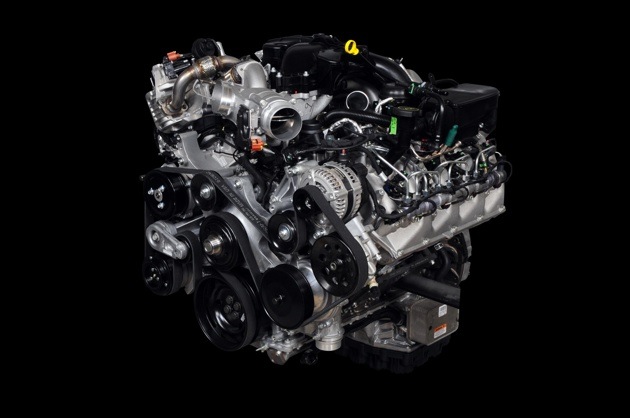
6.7l powerstroke diesel could make 800lbsft of TQ


http://news.pickuptrucks.com/2010/07/sources-say-ford-planning-800-pounds-feet-of-torque-for-6-7-power-stroke-diesel.html

The envelope for diesel power in heavy-duty pickup trucks continues to expand. In 2005, Dodge and Cummins broke the 600 pounds-feet of torque barrier. Earlier this year, 700 pounds-feet was shattered by both Ford and General Motors. Now, sources say 800 pounds-feet could fall before the end of 2010.

The 2011 Chevrolet Silverado and GMC Sierra HD pickups are the current kings of the hill with their 397 horsepower and 765 pounds-feet of torque 6.6-liter 'LML' Duramax V-8 engines. But as we first reported in March, Ford is said to be working on a major power boost for the all-new 390 horsepower, 735 pounds-feet 6.7-liter Power Stroke V-8 diesel

Friday, July 16, 2010

Canada to buy 65 F-35 jet fighters

http://ca.news.yahoo.com/s/reuters/100716/business/cbusiness_us_fighters

Canada will buy 65 new fighter jets from Lockheed Martin Corp for C$9 billion ($8.6 billion), one of the biggest arms deals in the nation's history, Defense Minister Peter MacKay said on Friday.


The first of the new generation Joint Strike Fighters will be delivered in 2016. The F-35s are designed to replace Canada's CF-18s, which are scheduled to reach the end of their working lives in about 2020.


MacKay brushed off criticism from opposition legislators who say the planes are too expensive and who question why Lockheed Martin received a sole-source contract.


"This is the best aircraft we can provide our men and women in uniform ... This is one of the largest defense procurement projects in Canadian history," MacKay told a news conference.

Thursday, July 15, 2010

2011 Chevrolet Corvette takes jab at NASA's funding cuts

FN FAL


The Fusil Automatique Léger ("Light Automatic Rifle") or FAL is a self-loading, selective fire battle rifle produced by the Belgian armaments manufacturer Fabrique Nationale de Herstal (FN). During the Cold War it was adopted by many North Atlantic Treaty Organization (NATO) countries, with the notable exception of the United States. It is one of the most widely used rifles in history, having been used by over 90 countries


The FAL was predominantly chambered for the 7.62x51mm NATO round, and because of its prevalence and widespread use among the armed forces of many NATO countries during the Cold War it was nicknamed "the right arm of the Free World".


The FAL operates by means of a gas-operated action very similar to that of the Russian SVT-40. The gas system is driven by a short-stroke, spring-loaded piston housed above the barrel, and the locking mechanism is what is known as a tilting breechblock. To lock, it drops down into a solid shoulder of metal in the heavy receiver much like the bolts of the Russian SKS carbine and French MAS-49 series of semi-automatic rifles. The gas system is fitted with a gas regulator behind the front sight base, allowing adjustment of the gas system in response to environmental conditions, and can be closed completely to allow for the firing of rifle grenades. The FAL's magazine capacity ranges from 5 to 30 rounds, with most magazines holding 20 rounds. In fixed stock versions of the FAL, the recoil spring is housed in the stock, while in folding-stock versions it is housed in the receiver cover, necessitating a slightly different receiver cover, recoil spring, and bolt carrier, and a modified lower receiver for the stock.[3]

FAL rifles have also been manufactured in both light and heavy-barrel configurations, with the heavy barrel intended for automatic fire as a section or squad light support weapon. Most heavy barrel FALs are equipped with bipods, although some light barrel models were equipped with bipods, such as the Austrian StG58 and the German G1, and a bipod was later made available as an accessory.

Among other 7.62x51mm NATO battle rifles at the time, the FN FAL had relatively light recoil, due to the gas system being able to be tuned via regulator in fore-end of the rifle, which allowed for excess gas which would simply increase recoil to bleed off. In fully-automatic mode, however, the shooter receives considerable abuse from recoil, and the weapon climbs off-target quickly, making automatic fire only of marginal effectiveness. Many military forces using the FAL eventually eliminated full-automatic firearms training in the light-barrel FAL.


Type Battle rifle
Place of origin Belgium
In service 1953–present
Used by See Users
Wars Vietnam War
Cambodian Civil War
Six-Day War
Portuguese Colonial War
South African Border War
Northern Ireland Troubles
Rhodesian Bush War
Falklands War
Gulf War
Balkan Wars
Cenepa War
Sierra Leone Civil War
Yom Kippur War
Rwandan Civil War

Designer Dieudonné Saive, Ernest Vervier
Designed 1947–1953
Manufacturer Fabrique Nationale (FN)
Produced 1953–present (IMBEL only)
Number built 2,000,000+ [1]
Variants See Variants
Specifications
Weight FAL 50.00: 4.3 kg (9.48 lb)
FAL 50.61: 3.90 kg (8.6 lb)
FAL 50.63: 3.79 kg (8.4 lb)
FAL 50.41: 5.95 kg (13.1 lb)

Length FAL 50.00 (fixed stock): 1,090 mm (42.9 in)
FAL 50.61 (stock extended): 1,095 mm (43.1 in)
FAL 50.61 (stock folded): 845 mm (33.3 in)
FAL 50.63 (stock extended): 998 mm (39.3 in)
FAL 50.63 (stock folded): 748 mm (29.4 in)
FAL 50.41 (fixed stock): 1,125 mm (44.3 in)

Barrel length FAL 50.00: 533 mm (21.0 in)
FAL 50.61: 533 mm (21.0 in)
FAL 50.63: 436 mm (17.2 in)
FAL 50.41: 533 mm (21.0 in)


--------------------------------------------------------------------------------

Cartridge 7.62x51mm NATO
Action Gas-operated, tilting breechblock
Rate of fire 650–700 rounds/min
Muzzle velocity FAL 50.00: 840 m/s (2,756 ft/s)
FAL 50.61: 840 m/s (2,755.9 ft/s)
FAL 50.63: 810 m/s (2,657.5 ft/s)
FAL 50.41: 840 m/s (2,755.9 ft/s)
Effective range 200–600 m sight adjustments
Feed system 20 or 30-round detachable box magazine
Sights Aperture rear sight, post front sight
553 mm (21.8 in) sight radius (FAL 50.00, FAL 50.41)
549 mm (21.6 in) sight radius (FAL 50.61, FAL 50.63)

USERS
Angola
Argentina
Austria
Bahrain
Bangladesh
Barbados
Belgium
Belize
Bolivia
Botswana
Brazil
Burundi
Cambodia
Cameroon
Chad
Chile
Colombia
Congo
Costa Rica
Cyprus
Democratic Republic of Congo
Djibouti
Dominican Republic
Ecuador
Fiji
Gambia
Ghana
Greece
Guyana
Honduras
India
Ireland
Israel
Jamaica
Kenya
Kuwait
Liberia
Libya
Luxembourg
Malawi
Malaysia
Malta
Mexico
Morocco
Mozambique
Myanmar
Nepal
Netherlands
Nigeria(Defence Industries Corporation of Nigeria) in Nigeria as the NR-1.
Oman
Panama
Papua New Guinea
Paraguay
Peru
Philippines: Moro National Liberation Front and the Moro Islamic Liberation Front
Portugal
Rwanda
Saint Vincent and the Grenadines
South Africa
Sri Lanka
Suriname
Swaziland
Syria
Tanzania
Thailand
Togo
Trinidad and Tobago
Tunisia
Turkey
Uganda
United Arab Emirates
Uruguay
Venezuela
Yemen
Zambia
Zimbabwe


"AK is for the masses and the FAL is for the classes"

Wednesday, July 14, 2010

new pic

how do ya like the new blog pic ??????

LinkWithin

Related Posts with Thumbnails